I spent several days last week with my new-ish co-workers during a three-day planning retreat. We had a chance to pound out fundraising strategies for the next few months, and get to know each other better.
At some point, we were discussing some past-time activity about which I was ambivalent (swimming, I think), and one co-worker turns to me and says, "What is it that you do like to do, Bethany?" (Somehow, I think they think I'm ambivalent about everything...)
"I read books." No questions about what my favorite book or author was or anything. Just quiet. I thought about adding that I read in the neighborhood of 85-100 a year, but decided in the silence that maybe I should just keep that bit of information to myself.
Cut to the next morning at breakfast.
I was in the hotel cafe, already up and having eaten and was working on writing things. I checked my email one more time before we switched gears and I saw an email from Simon and Schuster.
"Yes!" I said. "They are sending me galley copies." Blank looks around the table. "Galleys," I explained. "Review copies of books that aren't out yet."
Nope, nothing.
The meeting started then, but I was just struck anew with how weird we readers are to the rest of the world. Getting excited about books. Some that aren't even published yet.
I know one of my co-workers at least reads on airplanes -- we talked about Michael Connelly's Lincoln Lawyer series and I promised I wouldn't give anything away. But... I guess for those that aren't so bookish, those of us proclaimed Word Nerds really are a bit obsessed.
What about you? Any times you've been struck by how odd it is to the rest of the world that you like to read?
Showing posts with label Titles. Show all posts
Showing posts with label Titles. Show all posts
23 January 2012


12 January 2012
How do you pronounce "Karamazov" ?
Since I've said I'm going to read this book this year, I figured I should look up how to pronounce it.
There are long discussion boards about it (like this one) where Russian and non-Russian speakers weigh in.
It also makes me remember an old Square 1/Mathnet episode where they made jokes about the last name... is the Brothers KARE-a-ma-zaf or the Kare-a-MAHH-zof? (Anybody else remember this show??)
It seems like the consensus is "Ka-ra-MA-zaf" and now that means I can't delay figuring out my reading schedule for this book.
There are long discussion boards about it (like this one) where Russian and non-Russian speakers weigh in.
It also makes me remember an old Square 1/Mathnet episode where they made jokes about the last name... is the Brothers KARE-a-ma-zaf or the Kare-a-MAHH-zof? (Anybody else remember this show??)
It seems like the consensus is "Ka-ra-MA-zaf" and now that means I can't delay figuring out my reading schedule for this book.
 |
| This is the Komsomolskaya metro station in Moscow. Since Dostoevsky was exited to Siberia, an "underground" photo seemed appropriate. Also, I've been there. This metro station. Not Siberia. |
The Barnes and Noble Classic edition (for Nook) has good product reviews, so I'm likely going that route. It's far easier to do long classics as ebooks so I don't have to lug around the giant, physical tome. Some say it's not the best translation ever, but I know that I'll do better with it than 1000 pages of paper.
I started Anna Karenina last February and read two sections of it each month through May. BK is also divided into four parts, so I'm thinking the same kind of schedule unless, of course, I can't put it down.
03 January 2012
2012 Reading Goals
I really enjoyed having reading goals during 2011. I like that sense of accomplishment, of purpose and of challenge. Given that, I'm going to set reading goals for 2012 as well.
Here we go:
Here we go:
- Read a total of 90 books in 2012. I got through 92 in 2011 and with my current interest in graphic novels, I think 90 is do-able, though a bit of a stretch. Mathematically, that's 7.5 books a month, or about 2 a week. Phew. Maybe this means less TV (not a bad thing in the least.)
- Read another book by a Russian master. Though I didn't love Anna Karenina, I got through it and now feel like more of a "real reader" because of it. I'm going to do another Russian masterpiece in the moody winter. I'm not taking votes this year. It's Brothers Karamazov. Don't try to talk me out of it.
- Read 4 important books. I'm upping this by one from 2011, and hoping that I don't end this year in a crunch to finish like I did last year. One of these will be Catcher in the Rye. A friend gave me a copy years ago, and I've been a terrible friend and haven't read it yet. This year, I will.
- Finish both Sara Donati's "Lake in the Clouds" series and Lauren Willig's "Pink Carnation" series. I'm part way through both, and it's silly to not just plow forward and finish. All told, I think this is 5 or 6 books, total.
- Read one book from my bookshelf or a loaner every month. This was the goal I dropped last year, so I'm trying again.
02 January 2012
2011 Reading Goals -- Accomplished!
Back at the end of 2010, I set some reading goals for myself for 2011 and now that the year is over, it's time to see how I did.
Bethany's 2011 Reading Goals
Bethany's 2011 Reading Goals
- Read a total of 85 books in 2011. The grand total was 92.
- Read one book by a Russian master. I will gladly take recommendations. Pushed my way through Anna Karenina back in the first part of the year. Done.
- Read the remaining 6 of Michael Connelly's back list (and the new one coming out in April) to be totally caught up with everything he's written. Done and done, with the bonus of also having read the newest, new one that came out in November.
- Re-read either Lord of the Rings or C.S. Lewis' Space Trilogy. It was a decade ago that I last read them both. If I get through both, I'm awarding myself bonus points. No bonus points here, as I only made it through Lewis' Space Trilogy. That such a good series, it's a win.
- Read at least one book a month that comes from my bookshelf instead of the library to get caught up on things I've borrowed or purchased. I completely lost track of this goal. I know in the last few months, I've failed, so sigh... missed this one.
- Read at least 3 books considered to be "important" books that I've never read. Despite taking advanced or AP English through all of high school and two lit classes in college there's an alarming number of really famous books I've never read (for example,Catcher in the Rye.) I think it's high time that I tackle of a few of these classics. Just don't make me read Jane Austen unless it also involves zombies or sea monsters, OK? And the three were: "The Things They Carried" by Tim O'Brien, "Finding Alaska" by John Green and "Foundation" by Isaac Asimov.
And now, to create 2012's goals... tune in Thursday.
12 December 2011
Needing a "Important" Title
YIPES!
I was getting ready to do my post about how I accomplished my reading goals for year when I discovered a big problem. I said I was going to read three "important" books in addition to my slog through a Russian master.
It's December 12, and I've only read two other important books. One of those is probably going to be a stretch pick for some classic literature afficianados.
But -- I need a title recommendation, pronto. If you're a Word Nerd regular, you know that classics aren't my cup of tea. So, to help you help me, I like things like Scarlet Pimpernel and Jekyll and Hyde. There's no way that I'd make it through another Russian in two weeks or a Jane Austen (no books of talking and dancing, please!)
Leave your comments on what classic/important title I should tackle in the next two weeks. I can stop by the library ASAP.
I was getting ready to do my post about how I accomplished my reading goals for year when I discovered a big problem. I said I was going to read three "important" books in addition to my slog through a Russian master.
It's December 12, and I've only read two other important books. One of those is probably going to be a stretch pick for some classic literature afficianados.
But -- I need a title recommendation, pronto. If you're a Word Nerd regular, you know that classics aren't my cup of tea. So, to help you help me, I like things like Scarlet Pimpernel and Jekyll and Hyde. There's no way that I'd make it through another Russian in two weeks or a Jane Austen (no books of talking and dancing, please!)
Leave your comments on what classic/important title I should tackle in the next two weeks. I can stop by the library ASAP.
17 November 2011
The TBR Pile, or the Wowbrary Curse
My TBR pile is currently out of control, thanks mostly to Wowbrary.
Haven't heard of Wowbrary -- check it out www.wowbrary.org.
Weekly, they send you an email of all the new stuff at your library. They break down the new material down in categories -- fictions, mysteries & thrillers and the category that I've been perusing a lot, graphic novels.
The great thing about Wowbrary is while there are certain authors that I keep an eye out for when they have new stuff and put it on hold early (#166 for Michael Connelly's "The Drop"), others I don't follow as closely or just like browsing the shelves, my interest gets piqued by something new. A librarian friend told me she uses Wowbrary to keep up on nonfiction. I don't even click on that section or I'd be even more overwhelmed...
But the result is that I have something like a dozen books currently checked out of the library! Granted, getting through a graphic novel is an evening's entertainment or less since they read quickly, but there's a hefty number of novels in that mix as well. (And don't get me started on the books I own waiting still to be read...and the asks for reviews... )
Remember back in college when some schools would give reading days in between the last day of class and the start of finals week?
Maybe I need one of those....
Haven't heard of Wowbrary -- check it out www.wowbrary.org.
Weekly, they send you an email of all the new stuff at your library. They break down the new material down in categories -- fictions, mysteries & thrillers and the category that I've been perusing a lot, graphic novels.
The great thing about Wowbrary is while there are certain authors that I keep an eye out for when they have new stuff and put it on hold early (#166 for Michael Connelly's "The Drop"), others I don't follow as closely or just like browsing the shelves, my interest gets piqued by something new. A librarian friend told me she uses Wowbrary to keep up on nonfiction. I don't even click on that section or I'd be even more overwhelmed...
But the result is that I have something like a dozen books currently checked out of the library! Granted, getting through a graphic novel is an evening's entertainment or less since they read quickly, but there's a hefty number of novels in that mix as well. (And don't get me started on the books I own waiting still to be read...and the asks for reviews... )
Remember back in college when some schools would give reading days in between the last day of class and the start of finals week?
Maybe I need one of those....
27 October 2011
The Sci-fi/Fantasy Flow Chart
Have you seen this flow chart?
Earlier this year, NPR set out on a quest to identify the Top 100 Sci-fi/Fantasy books with reader input. I'm pretty sure I participated.
The list is out now, but SFSignal took the whole thing and put many of the choices into this flowchart to help you narrow down exactly what kind of book you're looking for in that wide genre.
The flowchart breaks down what's out there through questions like the following:
Do you like Arthurian legend? If you answer Yes, you move on to "Which character is your favorite?"
Morgan le Faye points to "Mists of Avalon," Merlin to "The Crystal Cave" and Arthur to the classic "Once and Future King."
On the sci-fi side, for example:
Ready to blast into space? --> Maybe, let's stay close, I'm new at this --> 2001: A Space Odyssey.
From there comes an arrow --> Too far. Too trippy. How about Mars?
That branches off to How Would You like to see the Red Planet?"
Vignettes gives you "The Martian Chronicles"
Environmentally gives you Kim Stanley Robinson's MarsTrilogy and
Through the Looking Glass is C.S. Lewis' "Out of the Silent Planet"
Spend your lunch hour perusing this diagram... it'll likely lead you to a new favorite book.
 |
| Click for full size image |
The list is out now, but SFSignal took the whole thing and put many of the choices into this flowchart to help you narrow down exactly what kind of book you're looking for in that wide genre.
The flowchart breaks down what's out there through questions like the following:
Do you like Arthurian legend? If you answer Yes, you move on to "Which character is your favorite?"
Morgan le Faye points to "Mists of Avalon," Merlin to "The Crystal Cave" and Arthur to the classic "Once and Future King."
On the sci-fi side, for example:
Ready to blast into space? --> Maybe, let's stay close, I'm new at this --> 2001: A Space Odyssey.
From there comes an arrow --> Too far. Too trippy. How about Mars?
That branches off to How Would You like to see the Red Planet?"
Vignettes gives you "The Martian Chronicles"
Environmentally gives you Kim Stanley Robinson's MarsTrilogy and
Through the Looking Glass is C.S. Lewis' "Out of the Silent Planet"
Spend your lunch hour perusing this diagram... it'll likely lead you to a new favorite book.
26 October 2011
The Audiobook Experiment, Part II
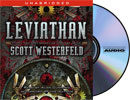
To wit, I have tried this with one book and, therefore, have a conclusive answer for you all.
The answer is, a brand new book can be enjoyable and comprehensible just listening to the audio.
So much so, that I'm completely captivated by Scott Westerfeld's Leviathan series and have the sequel, Behemoth, on hold in the audiobook version.
There was one plot point that had I been reading the book, I would have gone back a page or two to double-check. As it was with how it was tracked, rewinding wasn't really going to work. So, I just had to go with it and assumed that I missed a nuance or the track skipped or something. (I'm not saying what it was, because I don't want to put a spoiler out there.)
The other great thing about audiobooks (some that I've read for adults and definitely the kid and YA titles) is that the readers do voices. They don't just read the book, the vocally act the book. Leviathan was read by Alan Cumming who not only did changed pitches or cadences but accents for the Austrian, Germans and British characters. I think my favorites were his Count Volger and his Dr. Barlowe (OK, here's a shortcoming of audio books... I don't know how to really spell character names!)
Part of the original question was also about appreciation of the work. In the case, I think I was more appreciative to see how Westerfeld made an alternate history fit in a YA book that comprises steampunk, modern genetics, and warfare and still told a great story. Several times, I was nervously drumming my thumbs on the steering wheel to find out what would happen next.
Clearly, my deep scientific research has proven this question, that comprehension really isn't lost when delving into an audiobook as opposed to hardcopy.
04 August 2011
#bookswithalettermissing
I've got a book and I'm on a jet plane today, so I'm leaving you with some great tweets from Wednesday.
Twitter had a hashtag going on Wednesday for #bookswithalettermissing. The basic premise, take a letter out of the title of a book and re-explain the plot (sometimes, not necessary).
My faves:
Portrait of the Artist as a Young Ma - Stephanie Dedalus studies with the Jesuits, has a baby.
Marley and E Teaching a puppy to recognize vowels
"Berenstain Ears" The story of a family of auditory organs that live down a sunny dirt road, deep in ear country
The Ale of Genji: Pub crawls in Heian Japan
Ale of two cities. The history of Guinness and Boddingtons
Mein Kamp - Hitler's (somewhat selfish) account of camping holidays in his youth with his parents
The Lion, The Itch, and the Wardrobe: An allegorical Jesus lion rubs his nose against a cabinet, all cute like.
The Da Vinci Cod - a novel which claims to uncover a centuries old conspiracy about fish
The Holy Bile
Ride and Prejudice -- True life stories of minorities pulled over by police
'The Velveteen Rabbi': a religious leader you'll want to snuggle
No Country for Old Me
There are more... Harry Otter, Caching Fire, Lord of the Rings: Return of the Kin
And my two contributions:
Lice in Wonderland The real reason TweedleDee and TweedleDum are so twitchy
All Quiet on the Western Font A german typesetter deals with emotional toll of his job
If you search the hastag on Twitter, you can read a lot more
Twitter had a hashtag going on Wednesday for #bookswithalettermissing. The basic premise, take a letter out of the title of a book and re-explain the plot (sometimes, not necessary).
My faves:
Portrait of the Artist as a Young Ma - Stephanie Dedalus studies with the Jesuits, has a baby.
Marley and E Teaching a puppy to recognize vowels
"Berenstain Ears" The story of a family of auditory organs that live down a sunny dirt road, deep in ear country
The Ale of Genji: Pub crawls in Heian Japan
Ale of two cities. The history of Guinness and Boddingtons
Mein Kamp - Hitler's (somewhat selfish) account of camping holidays in his youth with his parents
The Lion, The Itch, and the Wardrobe: An allegorical Jesus lion rubs his nose against a cabinet, all cute like.
The Da Vinci Cod - a novel which claims to uncover a centuries old conspiracy about fish
The Holy Bile
Ride and Prejudice -- True life stories of minorities pulled over by police
'The Velveteen Rabbi': a religious leader you'll want to snuggle
No Country for Old Me
There are more... Harry Otter, Caching Fire, Lord of the Rings: Return of the Kin
And my two contributions:
Lice in Wonderland The real reason TweedleDee and TweedleDum are so twitchy
All Quiet on the Western Font A german typesetter deals with emotional toll of his job
If you search the hastag on Twitter, you can read a lot more
11 July 2011
Backless Books
No, I'm not talking about stripped books where the covers have been removed.
I'm talking about these books.


And I think the covers -- though both of women who are naked or mostly that way -- show that difference. Centuries of June (which will likely get it's own Book Banter post) is beautiful and lyrical. The nude on the cover is like art, a statue of a Venus. The woman on Naamah's Blessing gives off a far more sensual aura. Maybe because her face is visible, or all the jewelry, questions immediately come to a potential reader's mind -- is she dancing? For whom? Does she love him? Is it all show? Yes, there will be sex in this book, but there's a whole heck of a lot of political intrigue too. Still, I sort of want to make one of those brown paper bag covers like in grade school.
Has this happened to any of you? Any book covers that have made you embarrassed to be caught reading them?
I'm talking about these books.


Maybe it's just me, but I'm feeling somewhat self-conscious about carrying these two books around, to read say, at work, over lunch. I took Centuries of June home with me for 4th of July weekend and when my mom arched her eyebrow at it, I find myself protesting, "It's not that kind of book!" (All those middle school and high school years of sneaking books past my mom that I knew she would object to me reading is a hard habit to break....)
"Then why's that on the cover?" Mom asks.
"It's a metaphor." It's a poor fumble for a reason, but it's something and it sounds literary and important. (On the upside, having finished the book, it was a metaphor of sorts so my flimsy excuse was studier than I imagined.)
As for Naamah's Blessing, which I'm less than 100 pages into, I know from past Jacqueline Carey titles that it is, sort of, that kind of book.
Has this happened to any of you? Any book covers that have made you embarrassed to be caught reading them?
25 April 2011
Anna Karenina Pts. V and VI

April's goal was to get it done before I hopped on a plane for a little trip so that I could take fun books with me on the airplane (Michael Connelly, Lilith Saintcrow and Jim Butcher, anyone?)
Another friend said, "I can't get through it because it's so dark." And I thought, "Dark?" And then we promptly started talking about slogging our way through the unabridged Les Miserables and all those chapters about Waterloo...
But Anna.... I finally realized in this section that the title is really about the daughter, Anna, not Anna Arkadyevitch and I think today that an editor would demand a different title. (Of course an editor today would want graphic sex and Vronsky and Karenin would have had that duel 400 pages ago and the book would be a 1/3 of its length.)
But an editor would excise out all of Levin and Kitty which right now is the part of the story I like. And I get when Tolstoy put them in there. He had to show another couple, other than Anna and Vronsky. I like all the tenderness between them and how Levin is growing into his own from the beginning of the book.
Given the kind of story its been so far, I expect that AK will turn quite tragic in the last 250 pages. People have to start dying. No predictions yet on who it's going to be, but there's no way a book this long can have a happy ending.
31 March 2011
Anna Karenina Pts. III and IV
Let me say for the record, I'm not the newest fan of Leo Tolstoy on the planet, but I don't hate the book. I may bluster about reading it, but some of it's just talk.
He's got some good chapters in there. The one where Anna thought she might die and when Vronsky tried to kill himself and failed were actually kind of tense. I like the brimming story between Levin and Kitty. I have trouble with the chapters when Levin's threshing wheat with the peasants and when Alexey Alexandrovitch (aka Karenin) is going on about something with the native tribes and some kind of legislation.
I get it. I understand why Tolstoy writes them. I just don't enjoy them. I like genre fiction, about plot and not always about character and the mise en scene of a novel. I'm sure that I'm missing literary symbolism left and right in the story. Maybe if I was reading it for class and had a professor asking pointed questions, I would be getting more of the subtext.
I'm letting myself read the next Casey Daniels/Pepper Martin book and then I'm going back to AK Pt. V to keep making progress.
21 March 2011
The A-Z Playlist
 |
| Not my hand, nor my iPod |
Being the kind of person who likes alphabetical order, I thought, I could do this with all my music on my iPod. It's been an interesting listening experiment that's taken a couple of weeks to get through all the way.
The drawback of this idea is multiple version of the same song, either by the same person, or a different person and they all get played back to back. I listened to three "Come Fly With Me" versions in a row -- Sinatra, Sinatra Duets and Michael Buble. Shortly after that, I had three "Cry Me a Rivers" -- Diana Krall, Michael Buble and Harry Connick Jr. This is the fallback of enjoying the Great American Songbook/Jazz Standards. This problem happened throughout.. "I've Got You Under My Skin" was another one with a whopping five versions.
The other problem with this idea was when the song that came next was NOT appropriate for where my head was.
For example, I'm happily in the Fs, when the Fantasia on a Theme of Thomas Tallis comes up. Beautiful piece of classical music. Also happens to be my go-to music when I can't sleep. Of course, the Fantasia pops up about 3 p.m. at work when I need to be concentrating, not nodding off. The reverse was as equally true -- when something loud and bangy came on and I was trying to keep a train of thought on the tracks.
I'm still working my way through this project, in the middle Ns at this point. Looking forward to getting back to the regular shuffle feature.
14 March 2011
Reaching the End
Getting to the end is hard.
There are stories that I don't want to end, because I love the characters or love the action or how all of it ties together. And even though I know that if the writer kept going the story would start to suck because the story's been told, I still wish it could go on.
 It's not just books that make me feel this way, but sometimes TV shows too. Like currently, I have one more episode of West Wing to watch and then I'll be done with the series.
I missed this show and all its snappy politics when it was on network television -- I was busy learning how to be a reporter. And then I missed it in syndicated reruns because I didn't (and still don't) have cable. But through the power of Netflix and a good friend who owns all seven seasons, I've now watched all seven seasons, but for the last episode. And I don't want to watch the last one. Except I do.
This isn't the first show I've felt this way with. I remember this when X-Files ended. And when I reached the end of the David Tennant/10th Doctor episodes. And a little bit when watching the final season of Buffy. And Firefly. (OK, alot with Firefly...) Same with the fictional worlds of Jacqueline Carey's Kushiel books. And Nick Sagan's Idlewild series.
I've traveled along time with these characters. It's taken me a few years to get through all the back seasons because I didn't want to just devour them one after another. I've cried at poignant episodes and been proud of characters and ashamed with them and shocked at the turns of that fictional world's events.
I don't think the show would have continued well had it gone one to season 8 and the start of the Matt Santos presidency. I think seven years of a political procedural drama is really probably all any viewer can take. Whoever decided the show was finished at this point made the right decision.
An ending like this really allows for imagination to take over. What happens in the Santos presidency? Can Josh and Donna really make their relationship work while both working in high power positions in the White House? Does the fictional war in Kazakhstan end well?
So, by the time this posts, I will most likely have popped myself some popcorn and sat down to watch the final West Wing episode. I'll let my imagination take over for the rest.
And in the meantime, I'm taking nominations for what TV series to watch next.
There are stories that I don't want to end, because I love the characters or love the action or how all of it ties together. And even though I know that if the writer kept going the story would start to suck because the story's been told, I still wish it could go on.
I missed this show and all its snappy politics when it was on network television -- I was busy learning how to be a reporter. And then I missed it in syndicated reruns because I didn't (and still don't) have cable. But through the power of Netflix and a good friend who owns all seven seasons, I've now watched all seven seasons, but for the last episode. And I don't want to watch the last one. Except I do.
This isn't the first show I've felt this way with. I remember this when X-Files ended. And when I reached the end of the David Tennant/10th Doctor episodes. And a little bit when watching the final season of Buffy. And Firefly. (OK, alot with Firefly...) Same with the fictional worlds of Jacqueline Carey's Kushiel books. And Nick Sagan's Idlewild series.
I've traveled along time with these characters. It's taken me a few years to get through all the back seasons because I didn't want to just devour them one after another. I've cried at poignant episodes and been proud of characters and ashamed with them and shocked at the turns of that fictional world's events.
I don't think the show would have continued well had it gone one to season 8 and the start of the Matt Santos presidency. I think seven years of a political procedural drama is really probably all any viewer can take. Whoever decided the show was finished at this point made the right decision.
An ending like this really allows for imagination to take over. What happens in the Santos presidency? Can Josh and Donna really make their relationship work while both working in high power positions in the White House? Does the fictional war in Kazakhstan end well?
So, by the time this posts, I will most likely have popped myself some popcorn and sat down to watch the final West Wing episode. I'll let my imagination take over for the rest.
And in the meantime, I'm taking nominations for what TV series to watch next.
03 March 2011
Anna Karenina Pts 1 and 2
Somebody described it as a soap opera and I keep trying to keep that descriptor in my head while reading. I think it's helping. As I watch the tangle of lives of all the main character, it does feel like what I assume to be in a soap opera. (I've only ever flipped past them on TV and don't think I've ever even watched a whole episdoe...)
As promised, here's some discussion for parts 1 and 2. If you're reading along with us, feel free to tackle any or all of these questions in the comments:
So far, who's your favorite character and why?
If you were Tolstoy's editor today, which character would you urge him to cut out of the story at this point?
What's been the most surprising thing you noticed in how this book is put together? What would you expect to be different if Anna Karenina came out now?
25 February 2011
Little by Little
Goals are funny things.
Like Bethany's FB meme from yesterday, it's fun to use a standard to set a goal (by the way, I read 45 of those titles. But it's not a race.)
Personally, I think that lists like that are put together by some slightly pretentious person to feel better about themselves. It's a measuring stick. After all, we all claim to have read Ulysses, but really, who did? (okay, you in the back, put your hand down.)
Instead, I'd rather see a must read list from today's thought leaders on current books that have changed their lives. I would make it my goal to read all 100 of those titles. I loved many of the titles on there, but question the seriousness of any list that puts both "Far from the Madding Crowd" and "Harry Potter" on it. It just seems to be at cross-purposes.
Here's my goal: Collect 100 titles from the readers of Word Nerd. What books published in the last twenty years were awe inspiring when you first read them, re-read them or passed them to a friend?
We'll call it the Word Nerd meme, launch it into the world and see what it looks like when it comes back to us.
I'll start; check out the comments.
(Oh, and by the way, yes, I've been feeling rather parenthetical lately. My apologies for not making it shorter; I simply ran out of time.)
Like Bethany's FB meme from yesterday, it's fun to use a standard to set a goal (by the way, I read 45 of those titles. But it's not a race.)
Personally, I think that lists like that are put together by some slightly pretentious person to feel better about themselves. It's a measuring stick. After all, we all claim to have read Ulysses, but really, who did? (okay, you in the back, put your hand down.)
Instead, I'd rather see a must read list from today's thought leaders on current books that have changed their lives. I would make it my goal to read all 100 of those titles. I loved many of the titles on there, but question the seriousness of any list that puts both "Far from the Madding Crowd" and "Harry Potter" on it. It just seems to be at cross-purposes.
Here's my goal: Collect 100 titles from the readers of Word Nerd. What books published in the last twenty years were awe inspiring when you first read them, re-read them or passed them to a friend?
We'll call it the Word Nerd meme, launch it into the world and see what it looks like when it comes back to us.
I'll start; check out the comments.
(Oh, and by the way, yes, I've been feeling rather parenthetical lately. My apologies for not making it shorter; I simply ran out of time.)
24 February 2011
What I've Read -- and Not
This meme pops up from time to time on Facebook, with the claim that the BBC says people have only read 6 of the following 100 titles. A little snooping turns up that the list probably has little to do with the BBC. A good look at the list also reveals some odd things with two title counted twice... The Lion The Witch and the Wardrobe is part of the Chronicles of Narnia; likewise, Hamlet is part of the Complete Works of Shakespeare.
Nevertheless, it's an interesting list and I had to go ahead and play this game.
The rules are to bold what you've read and italics what you've started and never finished. With only 4 italics, this also reveals that I finish everything I read, even if I don't really enjoy it. In a few months this will drop down to three once I finish Anna Karenina.
I've read 28 of these titles and I think I may come back to this list to pick the other three "important" books that I set out to read as a goal for this year.
1. Pride and Prejudice – Jane Austen
2. The Lord of the Rings – JRR Tolkien
3. Jane Eyre – Charlotte Bronte
4. Harry Potter series – JK Rowling
5. To Kill a Mockingbird – Harper Lee
6. The Bible
7. Wuthering Heights – Emily Bronte
8. Nineteen Eighty Four – George Orwell
9. His Dark Materials – Philip Pullman
10. Great Expectations – Charles Dickens
11. Little Women – Louisa M Alcott
12. Tess of the D’Urbervilles – Thomas Hardy
13. Catch 22 – Joseph Heller
14. Complete Works of Shakespeare
15. Rebecca – Daphne Du Maurier
16. The Hobbit – JRR Tolkien
17. Birdsong – Sebastian Faulks
18. The Bean Trees - Barbara Kingsolver
19. The Time Traveller’s Wife – Audrey Niffenegger
20. Middlemarch – George Eliot
21. Gone With The Wind – Margaret Mitchell
22. The Great Gatsby – F Scott Fitzgerald
23. Bleak House – Charles Dickens
24. War and Peace – Leo Tolstoy
25. The Hitch Hiker’s Guide to the Galaxy – Douglas Adams
26. Brideshead Revisited – Evelyn Waugh
27. Crime and Punishment – Fyodor Dostoyevsky
28. Grapes of Wrath – John Steinbeck
29. Alice in Wonderland – Lewis Carroll
30. The Wind in the Willows – Kenneth Grahame
31. Anna Karenina – Leo Tolstoy
32. David Copperfield – Charles Dickens
33. Chronicles of Narnia – CS Lewis
34. Emma – Jane Austen
35. Persuasion – Jane Austen
36. The Lion, The Witch and The Wardrobe – CS Lewis
37. The Kite Runner – Khaled Hosseini
38. Captain Corelli’s Mandolin – Louis De Berniere
39. Memoirs of a Geisha – Arthur Golden
40. Winnie the Pooh – AA Milne
41. Animal Farm – George Orwell
42. The Da Vinci Code – Dan Brown
43. One Hundred Years of Solitude – Gabriel Garcia Marquez
44. A Prayer for Owen Meaney – John Irving
45. The Woman in White – Wilkie Collins
46. Anne of Green Gables – LM Montgomery
47. Far From The Madding Crowd – Thomas Hardy
48. The Handmaid’s Tale – Margaret Atwood
49. Lord of the Flies – William Golding
50. Atonement – Ian McEwan
51. Life of Pi – Yann Martel
52. Dune – Frank Herbert
53. Cold Comfort Farm – Stella Gibbons
54. Sense and Sensibility – Jane Austen
55. A Suitable Boy – Vikram Seth
56. The Shadow of the Wind – Carlos Ruiz Zafon
57. A Tale Of Two Cities – Charles Dickens
58. Brave New World – Aldous Huxley
59. The Curious Incident of the Dog in the Night-time – Mark Haddon
60. Love In The Time Of Cholera – Gabriel Garcia Marquez
61. Of Mice and Men – John Steinbeck
62. Lolita – Vladimir Nabokov
63. The Secret History – Donna Tartt
64. The Lovely Bones – Alice Sebold
65. Count of Monte Cristo – Alexandre Dumas
66. On The Road – Jack Kerouac
67. Jude the Obscure – Thomas Hardy
68. Bridget Jones’s Diary – Helen Fielding
69. Midnight’s Children – Salman Rushdie
70. Moby Dick – Herman Melville
71. Oliver Twist – Charles Dickens
72. Dracula – Bram Stoker
73. The Secret Garden – Frances Hodgson Burnett
74. Notes From A Small Island – Bill Bryson
75. Ulysses – James Joyce
76. The Bell Jar – Sylvia Plath
77. Swallows and Amazons – Arthur Ransome
78. Germinal – Emile Zola
79. Vanity Fair – William Makepeace Thackeray
80. Possession – AS Byatt
81. A Christmas Carol – Charles Dickens
82. Cloud Atlas – David Mitchell
83. The Color Purple – Alice Walker
84. The Remains of the Day – Kazuo Ishiguro
85. Madame Bovary – Gustave Flaubert
86. A Fine Balance – Rohinton Mistry
87. Charlotte’s Web – EB White
88. The Five People You Meet In Heaven – Mitch Albom
89. Adventures of Sherlock Holmes – Sir Arthur Conan Doyle
90. The Faraway Tree Collection – Enid Blyton
91. Heart of Darkness – Joseph Conrad
92. The Little Prince – Antoine De Saint-Exupery
93. The Wasp Factory – Iain Banks
94. Watership Down – Richard Adams
95. A Confederacy of Dunces – John Kennedy Toole
96. A Town Like Alice – Nevil Shute
97. The Three Musketeers – Alexandre Dumas
98. Hamlet – William Shakespeare
99. Charlie and the Chocolate Factory – Roald Dahl
100. Les Miserables – Victor Hugo
Nevertheless, it's an interesting list and I had to go ahead and play this game.
The rules are to bold what you've read and italics what you've started and never finished. With only 4 italics, this also reveals that I finish everything I read, even if I don't really enjoy it. In a few months this will drop down to three once I finish Anna Karenina.
I've read 28 of these titles and I think I may come back to this list to pick the other three "important" books that I set out to read as a goal for this year.
1. Pride and Prejudice – Jane Austen
2. The Lord of the Rings – JRR Tolkien
3. Jane Eyre – Charlotte Bronte
4. Harry Potter series – JK Rowling
5. To Kill a Mockingbird – Harper Lee
6. The Bible
7. Wuthering Heights – Emily Bronte
8. Nineteen Eighty Four – George Orwell
9. His Dark Materials – Philip Pullman
10. Great Expectations – Charles Dickens
11. Little Women – Louisa M Alcott
12. Tess of the D’Urbervilles – Thomas Hardy
13. Catch 22 – Joseph Heller
14. Complete Works of Shakespeare
15. Rebecca – Daphne Du Maurier
16. The Hobbit – JRR Tolkien
17. Birdsong – Sebastian Faulks
18. The Bean Trees - Barbara Kingsolver
19. The Time Traveller’s Wife – Audrey Niffenegger
20. Middlemarch – George Eliot
21. Gone With The Wind – Margaret Mitchell
22. The Great Gatsby – F Scott Fitzgerald
23. Bleak House – Charles Dickens
24. War and Peace – Leo Tolstoy
25. The Hitch Hiker’s Guide to the Galaxy – Douglas Adams
26. Brideshead Revisited – Evelyn Waugh
27. Crime and Punishment – Fyodor Dostoyevsky
28. Grapes of Wrath – John Steinbeck
29. Alice in Wonderland – Lewis Carroll
30. The Wind in the Willows – Kenneth Grahame
31. Anna Karenina – Leo Tolstoy
32. David Copperfield – Charles Dickens
33. Chronicles of Narnia – CS Lewis
34. Emma – Jane Austen
35. Persuasion – Jane Austen
36. The Lion, The Witch and The Wardrobe – CS Lewis
37. The Kite Runner – Khaled Hosseini
38. Captain Corelli’s Mandolin – Louis De Berniere
39. Memoirs of a Geisha – Arthur Golden
40. Winnie the Pooh – AA Milne
41. Animal Farm – George Orwell
42. The Da Vinci Code – Dan Brown
43. One Hundred Years of Solitude – Gabriel Garcia Marquez
44. A Prayer for Owen Meaney – John Irving
45. The Woman in White – Wilkie Collins
46. Anne of Green Gables – LM Montgomery
47. Far From The Madding Crowd – Thomas Hardy
48. The Handmaid’s Tale – Margaret Atwood
49. Lord of the Flies – William Golding
50. Atonement – Ian McEwan
51. Life of Pi – Yann Martel
52. Dune – Frank Herbert
53. Cold Comfort Farm – Stella Gibbons
54. Sense and Sensibility – Jane Austen
55. A Suitable Boy – Vikram Seth
56. The Shadow of the Wind – Carlos Ruiz Zafon
57. A Tale Of Two Cities – Charles Dickens
58. Brave New World – Aldous Huxley
59. The Curious Incident of the Dog in the Night-time – Mark Haddon
60. Love In The Time Of Cholera – Gabriel Garcia Marquez
61. Of Mice and Men – John Steinbeck
62. Lolita – Vladimir Nabokov
63. The Secret History – Donna Tartt
64. The Lovely Bones – Alice Sebold
65. Count of Monte Cristo – Alexandre Dumas
66. On The Road – Jack Kerouac
67. Jude the Obscure – Thomas Hardy
68. Bridget Jones’s Diary – Helen Fielding
69. Midnight’s Children – Salman Rushdie
70. Moby Dick – Herman Melville
71. Oliver Twist – Charles Dickens
72. Dracula – Bram Stoker
73. The Secret Garden – Frances Hodgson Burnett
74. Notes From A Small Island – Bill Bryson
75. Ulysses – James Joyce
76. The Bell Jar – Sylvia Plath
77. Swallows and Amazons – Arthur Ransome
78. Germinal – Emile Zola
79. Vanity Fair – William Makepeace Thackeray
80. Possession – AS Byatt
81. A Christmas Carol – Charles Dickens
82. Cloud Atlas – David Mitchell
83. The Color Purple – Alice Walker
84. The Remains of the Day – Kazuo Ishiguro
85. Madame Bovary – Gustave Flaubert
86. A Fine Balance – Rohinton Mistry
87. Charlotte’s Web – EB White
88. The Five People You Meet In Heaven – Mitch Albom
89. Adventures of Sherlock Holmes – Sir Arthur Conan Doyle
90. The Faraway Tree Collection – Enid Blyton
91. Heart of Darkness – Joseph Conrad
92. The Little Prince – Antoine De Saint-Exupery
93. The Wasp Factory – Iain Banks
94. Watership Down – Richard Adams
95. A Confederacy of Dunces – John Kennedy Toole
96. A Town Like Alice – Nevil Shute
97. The Three Musketeers – Alexandre Dumas
98. Hamlet – William Shakespeare
99. Charlie and the Chocolate Factory – Roald Dahl
100. Les Miserables – Victor Hugo
15 February 2011
Random Thought on Reading Classics

Reading a classic is like drinking a fine wine. When pair with the right item, it complements the meal. It is meant to be sipped, and savored. A classic novel moves slowly in the same way. It is the details that add the dimensions to the wine. Just as the various flavors of the wine can only be experienced when sipped, the classic novel builds on the details to make a complete picture.
Now, I'm a wine girl, but I love a beer every so often. A beer goes down quick and easy. Beer bongs exist for a reason, people. Same with the crazy helmets and beer pong. None of those for the wine group. Beer is more like a modern novel - fast pace and moving through life at the speed of life.
Okay, maybe given my standard reading list, I'm more of a beer girl. But I don't mind switching out for a good bottle of wine every so often.
What do you think of the analogy?
Personally, I need something to sub in for a martini. I love those on occasion too.
21 January 2011
The Russians -- A Book Club?
There are nine more days to vote in the Russian masters poll over there -->
 At this point, it's looking like Anna Karenina, so if you have a preference for one of the others, you should vote. Or vote again. I recently had a friend tell me she loved this book, but that I should keep a list of characters handy. My heart rose and sank all at the same time. I haven't kept notes on a book since college lit classes...
Turns out, co-nerd Stacie also isn't well versed in the Russians either, so I'm trying to convince her to read it with me.
And to that end, I'm going to throw out this idea -- What if reading a Russian Masterpiece was a Word Nerd book club-esque feature? You can read it with me (or us, cough, Stacie) if you want. We'll set a reasonable length of time for finishing it and periodically, we'll open up a post for discussion.
Any takers? Comment if you're in and don't forget to vote.
Turns out, co-nerd Stacie also isn't well versed in the Russians either, so I'm trying to convince her to read it with me.
And to that end, I'm going to throw out this idea -- What if reading a Russian Masterpiece was a Word Nerd book club-esque feature? You can read it with me (or us, cough, Stacie) if you want. We'll set a reasonable length of time for finishing it and periodically, we'll open up a post for discussion.
Any takers? Comment if you're in and don't forget to vote.
17 January 2011
Birthday Books
Ever wonder what people were reading when you were born?
Crazy idea huh, the best-seller that was capturing the rest of the world's attention while you were becoming the apple of your parents' eye.
Biblioz.com has a new searchable feature that finds the top 15 fiction and non-fiction sellers for the week you were born.
I had no idea what my birthday fiction list would reveal, but I was pleasantly surprised to find it was a book I'd a) heard of and b) actually read and enjoyed.
The top-selling fiction book for the week of June 2, 1980? Robert Ludlum's The Bourne Identity.
What book topped the charts when you were born?
Crazy idea huh, the best-seller that was capturing the rest of the world's attention while you were becoming the apple of your parents' eye.
Biblioz.com has a new searchable feature that finds the top 15 fiction and non-fiction sellers for the week you were born.
I had no idea what my birthday fiction list would reveal, but I was pleasantly surprised to find it was a book I'd a) heard of and b) actually read and enjoyed.
The top-selling fiction book for the week of June 2, 1980? Robert Ludlum's The Bourne Identity.
What book topped the charts when you were born?
Subscribe to:
Posts (Atom)